All the Options You Need for Life Data Analysis

Intuitive and Flexible Work Environment

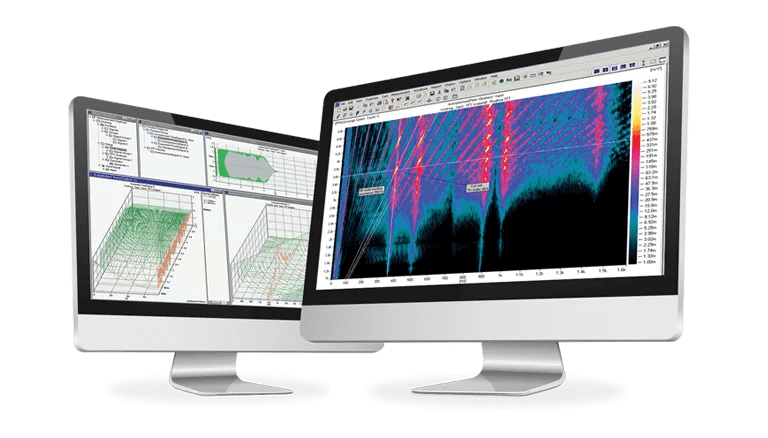
The Weibull++ interface is an intuitive, flexible and completely integrated work center designed around the data folio (similar to an Excel® worksheet). In Version 7, the interface has been enhanced to allow you to manage multiple analysis folios and related information all together in a single file. Using the "Project Explorer" approach that was first introduced in ReliaSoft's BlockSim software, Weibull++ now provides an intuitive, hierarchical (tree) view to allow you to view and manage one or many standard folios, specialized folios, plot sheets, reliability block diagrams, spreadsheet reports and/or attached documents per project. At the same time, the new work environment "stays true to its roots" so that users who are familiar with previous versions of the software will be able to enter and analyze data in much the same way as always.

To help you become productive quickly after installing the software, the intuitive, user-friendly interface has been designed to have a familiar "look and feel" consistent with other software that you may already know how to use. In addition, Weibull++ comes with useful online tips and help, along with an extensive collection of annotated sample files to demonstrate available techniques and applications.

Integration with Other ReliaSoft Software

Weibull++ is directly integrated within other ReliaSoft software whenever you need to specify a distribution and parameters based on a calculated data set. Integration is currently available for the following products: ALTA, BlockSim, RENO, RGA, Xfmea, RCM++ and XFRACAS.

Import Data from Excel and Other Delimited Files

In addition to providing a variety of data sheet formats designed to fit your particular data and analysis requirements, Weibull++ makes it easy to import data from outside sources, including: Weibull++ 4, 5 or 6; ALTA, Excel, Tab Delimited, Comma Delimited, Space Delimited or Semi-colon Delimited files.

Support for All Life Data Types and Multiple Lifetime Distributions

Weibull++’s data entry spreadsheets for standard life data analysis and modeling support all life data types and all major lifetime distributions. You can analyze time-to-failure (complete), right censored (suspension), left censored, interval censored or free-form data, entered individually or in groups. Available lifetime distribution models include the 1, 2 and 3 parameter Weibull distribution; 2, 3 and 4 subpopulation Mixed Weibull distribution; 1 and 2 parameter Exponential distribution; Normal distribution; Lognormal distribution and Generalized Gamma distribution. In addition, Version 7 now supports the Gamma, Logistic, Loglogistic, Gumbel and Weibull-Bayesian distributions. With the incorporation of the Weibull-Bayesian model, which considers prior knowledge of the Weibull Beta parameter, Weibull++ now supports data analysis methodologies from both Classical and Bayesian statistics.

Distribution WizardTM for Goodness-of-Fit Tests

The Distribution Wizard automatically performs multiple goodness-of-fit tests on the available lifetime distributions and recommends the one that is most appropriate to model your data set.

Monte Carlo Data Generation

You can use Monte Carlo simulation to generate sample data sets based on any of the supported lifetime distributions or a user-defined function. This can include complete data, right censored, interval censored and/or left censored data points, according to your specifications.


Choice of Parameter Estimation Methods

Weibull++ allows you to choose the parameter estimation method that is most appropriate for your data set. Options include Maximum Likelihood Estimation (MLE), Rank Regression on X or Rank Regression on Y with Median Ranks, Kaplan-Meier or ReliaSoft ranking methods.

Parameter Experimenter

The Parameter Experimenter allows you to solve for a parameter of a distribution given the other parameter(s) and one data point (unreliability at a given time) or to solve for all parameters of a distribution given two unreliability data points.