DOE++ Product Features

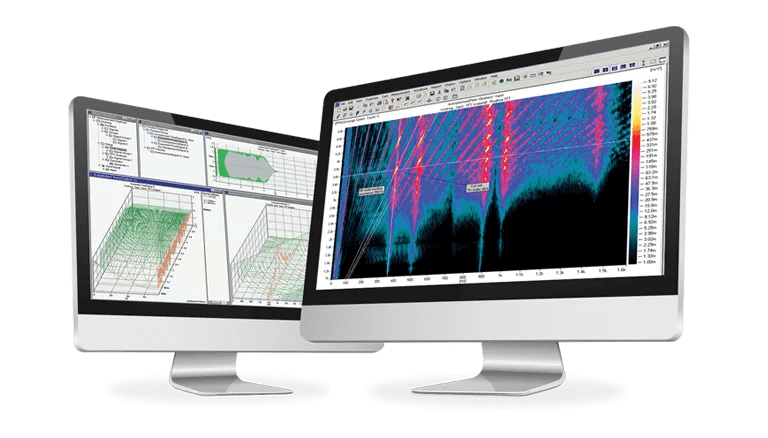
Click to see a picture of the software interface...ReliaSoft's DOE++ software facilitates traditional Design of Experiments (DOE) techniques for studying the factors that may affect a product or process in order to identify significant factors and optimize designs. The software also expands upon standard methods with the introduction of Reliability DOE folios, which offer a major breakthrough for reliability-related analyses by providing the proper analysis treatment for interval and right censored data!

DOE Software Designed with Reliability in Mind!TM

DOE++ guides you through the designs and analyses necessary for all phases of the DOE strategy, from screening for significant factors, through in-depth analysis of the targeted factors and factorial interactions, to selecting input levels for optimal performance. The powerful and flexible interface facilitates the design and analysis process while making it easy to organize related analyses together in the same file.

Supported Design Types

DOE++ facilitates the design types employed in traditional DOE and also expands upon the traditional methods to support "reliability DOE," which provides the proper treatment for interval and right censored data. Supported design types include:

  • One Factor Designs
  • Factorial Designs
    • Two Level Full Factorial
    • Two Level Fractional Factorial
    • Plackett-Burman
    • General Full Factorial
    • Taguchi Orthogonal Array
  • Taguchi Robust Designs
  • Response Surface Method Designs
    • Central Composite
    • Box-Behnken
  • Only in DOE++!
    Reliability DOE
    • One Factor Reliability Designs
    • Two Level Full Factorial Reliability Designs
    • Two Level Fractional Factorial Reliability Designs
    • Plackett-Burman Reliability Designs

DOE++’s File Import Wizard allows you to import data to build any of the available designs, while the Multiple Linear Regression Tool utility allows quick exploration of regression relationships between the responses and factors of interest.

Detailed Analysis of Experimental Data

DOE++ provides a detailed analysis of experimental data, including:

  • Analysis of variance (ANOVA) information — an overview of the effects of factor(s) on response(s).
  • Fit metrics to help assess the validity of the model.
  • Level-specific information and comparisons for one factor designs.
  • The ability to break down the importance of individual factors, interactions and/or groups of effects to output.
  • Likelihood ratio test results for reliability DOEs.

Extensive Plotting Capabilities to Present Analysis Results Graphically

DOE++ offers a wide variety of diagnostic, interpretive and predictive plots to graphically present your analysis results. In addition to a selection of individual plots (which are available for each design type based on their relevance and utility), the flexible Side-by-Side Plots utility allows you to simultaneously view multiple plots for a given response and the MultiPlots utility facilitates comparison of different response analyses.

Level Plots:

  • Response vs. Level
  • Level Mean
  • Life Characteristic
  • Box Plot
  • Mean PDFs
  • Comparison Chart

Effect Plots:

  • Effect Probability
  • Pareto Chart
  • Main Effects
  • Interactions
  • Interaction Matrix
  • Term Effect
  • Cube Plot
  • Scatter Plot

Residual Plots:

  • Residual Probability
  • Residual vs. Fitted
  • Residual vs. Order
  • Residual vs. Factor
  • Residual Histogram
  • Residual Autocorrelation
  • Fitted vs. Actual

Diagnostic Plots:

  • Leverage
  • Cook's Distance
  • Box-Cox Transformation

Put Your Findings into Practice with the Powerful Optimization Utility

You can specify the goal for each response in your analysis as a maximum, minimum or target value. DOE++ will search for the combinations of factor settings that most effectively lead to the desired output and rank them according to their desirability. If certain responses are more important to optimize than others, or if the target is more narrowly defined, the software can take that into account. Solutions can be viewed graphically or numerically.